Budgets by topic
Where it comes from. Where it goes. What it delivers. Explore the data behind public budgets, from country comparisons to the detail of a single city.
Explore the reportsHow money reaches services
Amounts entering budgets and the intermediaries connecting schools, care, pensions and benefits.
MF ČR · Census · SSA · OECD · national accounts28 reports to explore
Across countries
Compare countries
Follow a topic across borders, with original sources and coverage explained in each report.
Where the money goes
The state's large spending areas: what they cost, what they buy and how they change.
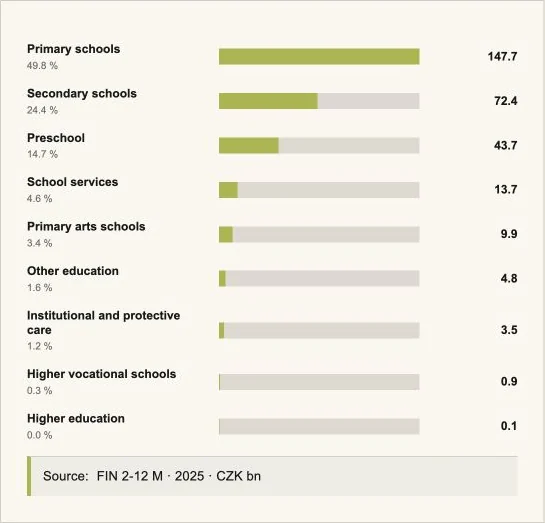
Education
The full flow from ministry through regions and municipalities to school types, without double-counting transfers.
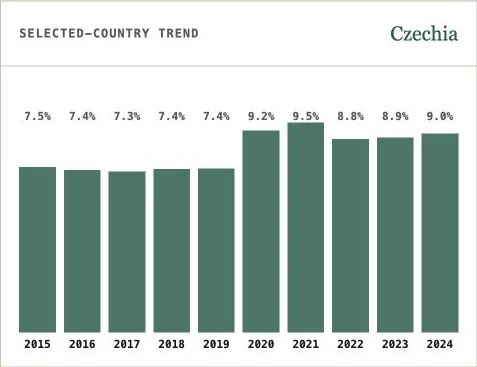
Health
Spending, workforce, hospital use and health outcomes.
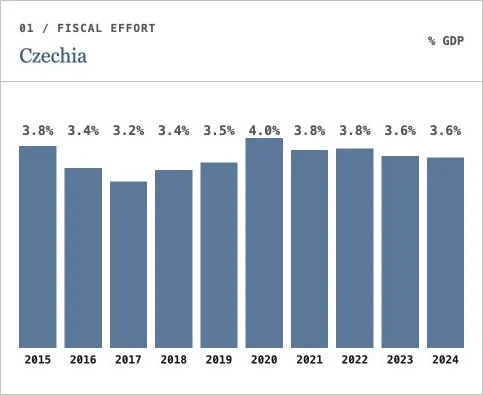
Transportation
Spending, its investment and operating mix, government levels, network scale and ten-year history.
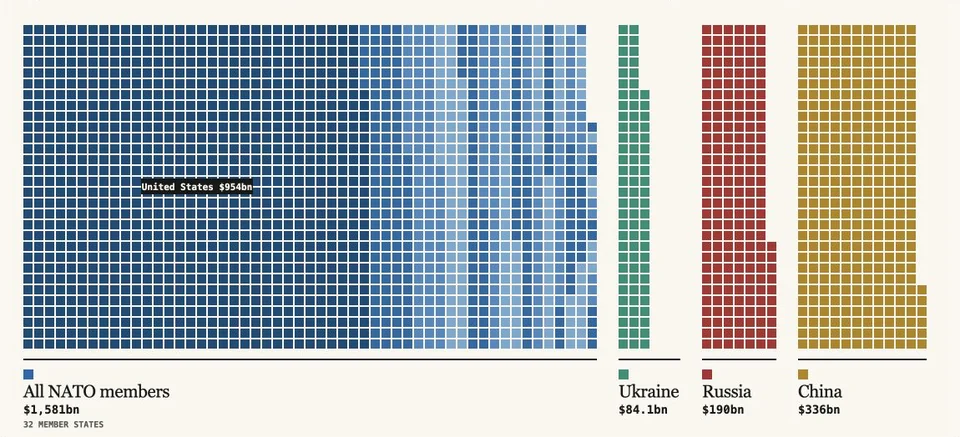
Defense spending
Spending against GDP, the NATO commitment and the most detailed national budget lines available.
Taxes, transfers and income inequality
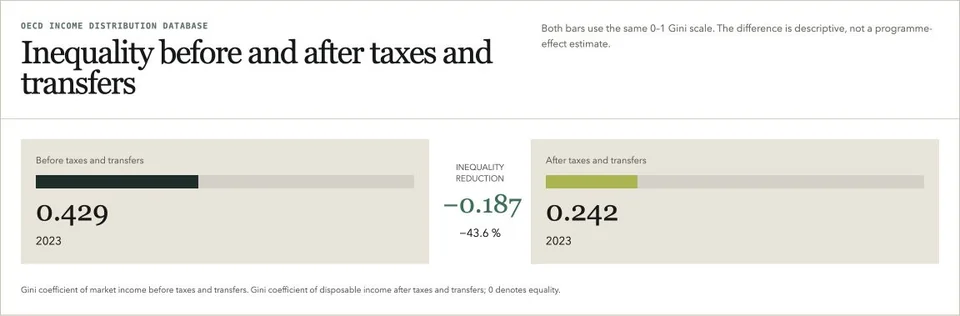
Income inequality before and after taxes and transfers, with poverty and spending shown separately.
Where the money comes from
Taxes, levels of government, and the money that flows to and from the European Union.
How money reaches services
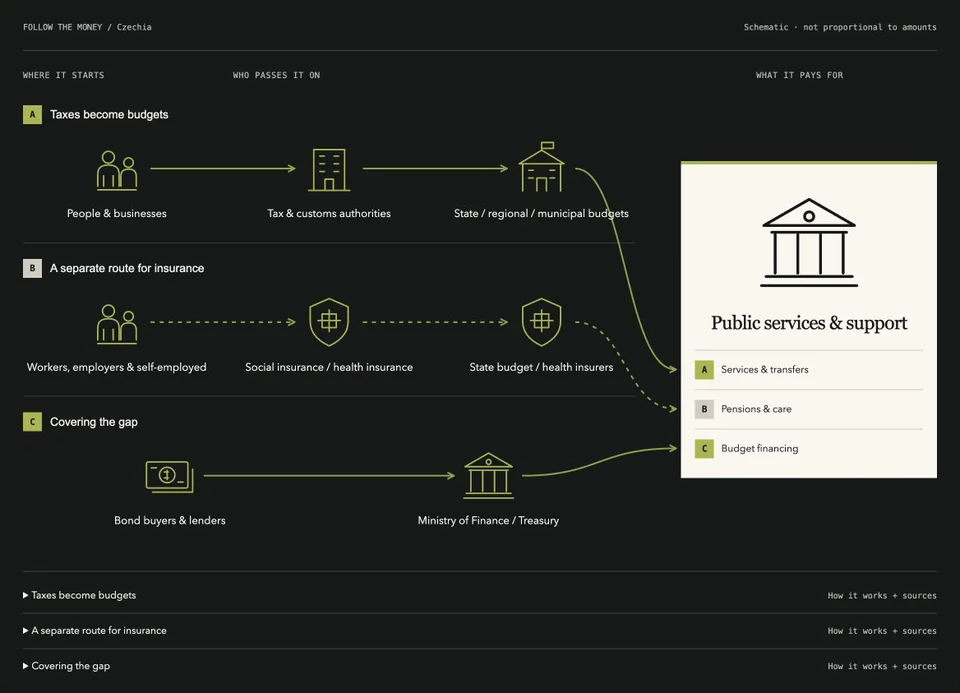
Amounts entering budgets and the intermediaries connecting schools, care, pensions and benefits.
Where the state gets its money
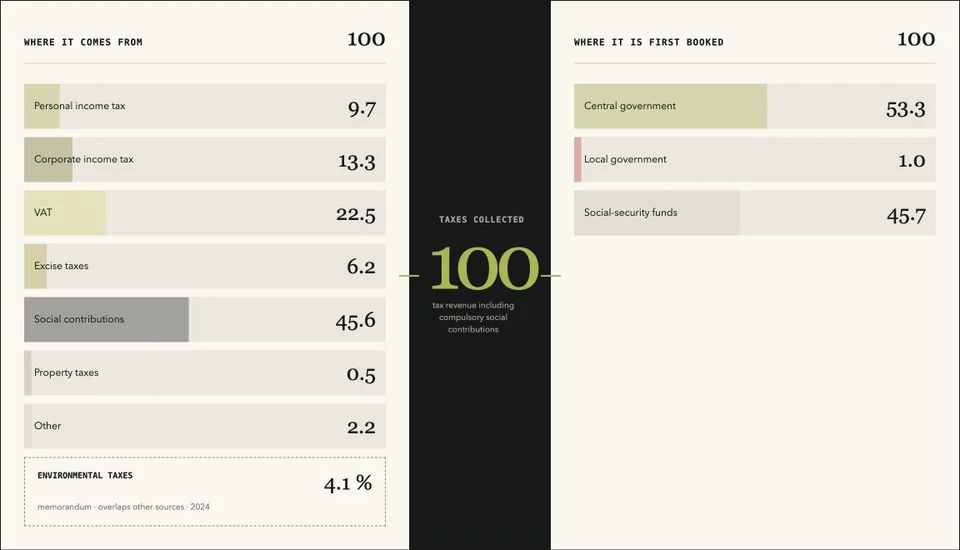
The tax mix, government levels, behaviour in downturns and the path to municipal transfers.
Tax burden
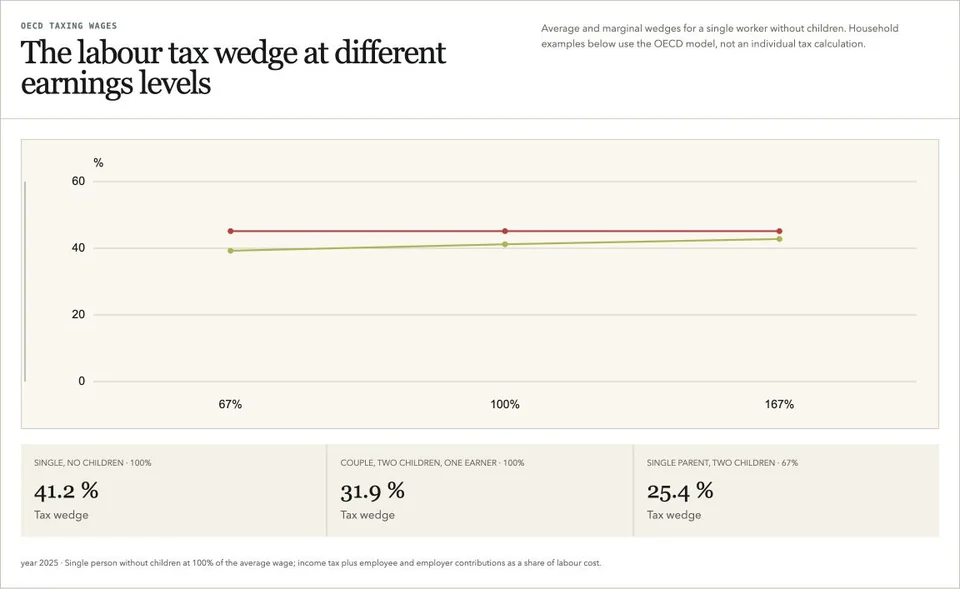
Taxes on labour, business and carbon, plus municipal taxing power, under OECD definitions.
Money between countries and the EU
Attributed spending, national contributions and why they are not a single national-budget line.
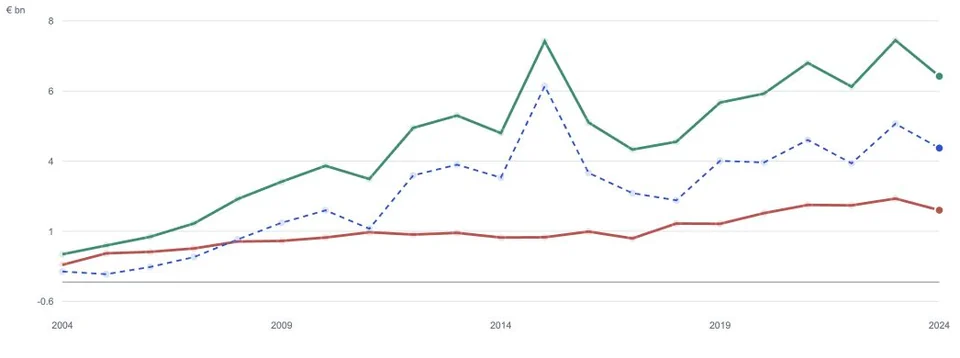
Economy, industry and trade
The base that public budgets are paid from: economic performance, production and goods crossing borders.
Where people work and who employs them
Three sectors, all 45 service divisions, public employers and people outside the labour force.

Economy in context
Global long-run series, the economic cycle, coverage and a reusable contract for econometric reporting.
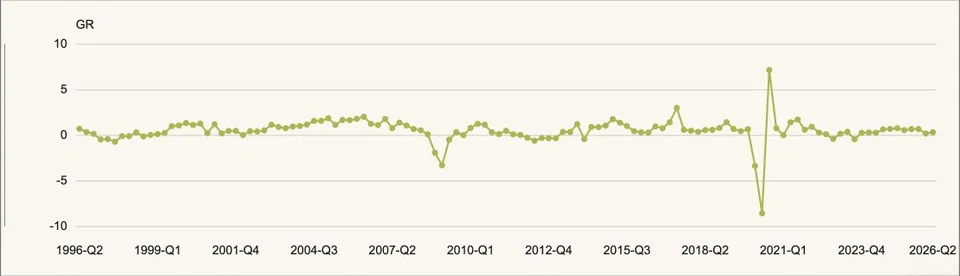
Industry month by month
Which sectors grow and which contract. Monthly trends, annual summaries, and traceable national and European sources.
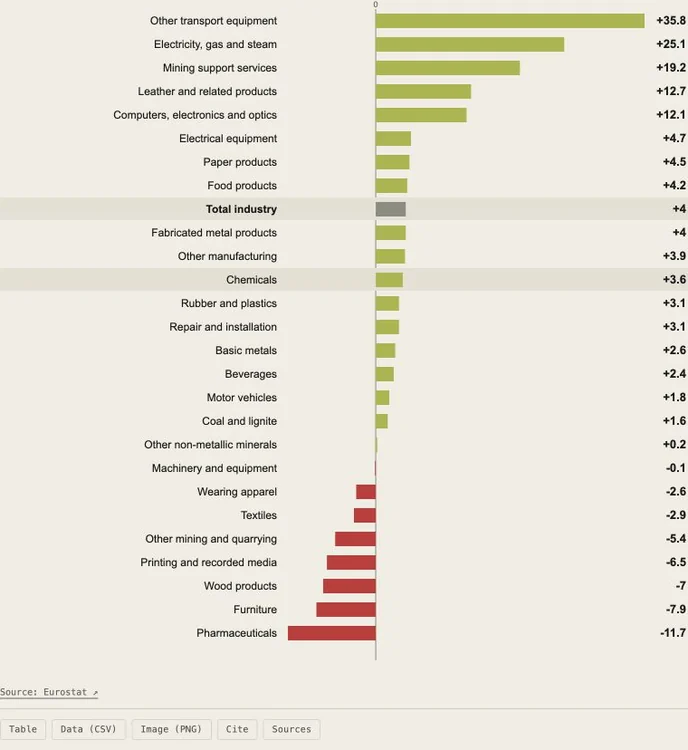
Inside industry
Business earnings and investment, factory capacity, real output and individual products. Eurostat data since 2010.
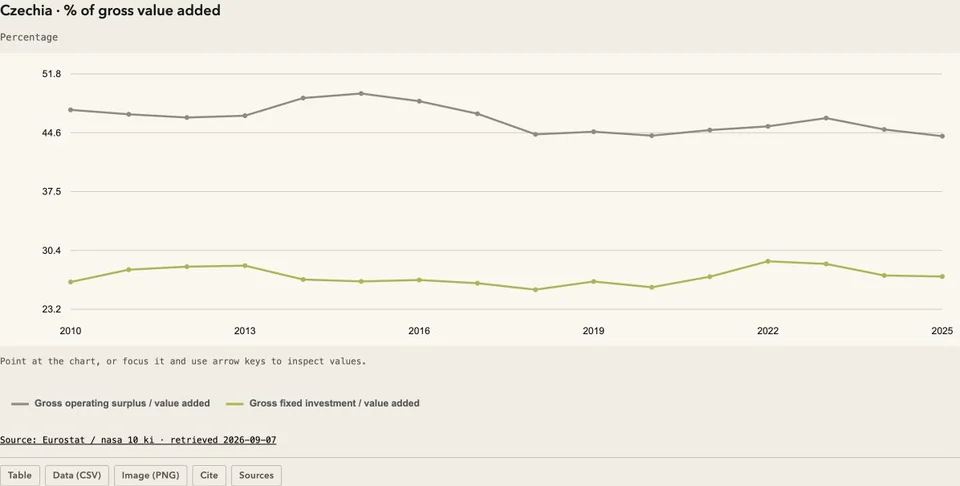
Foreign trade
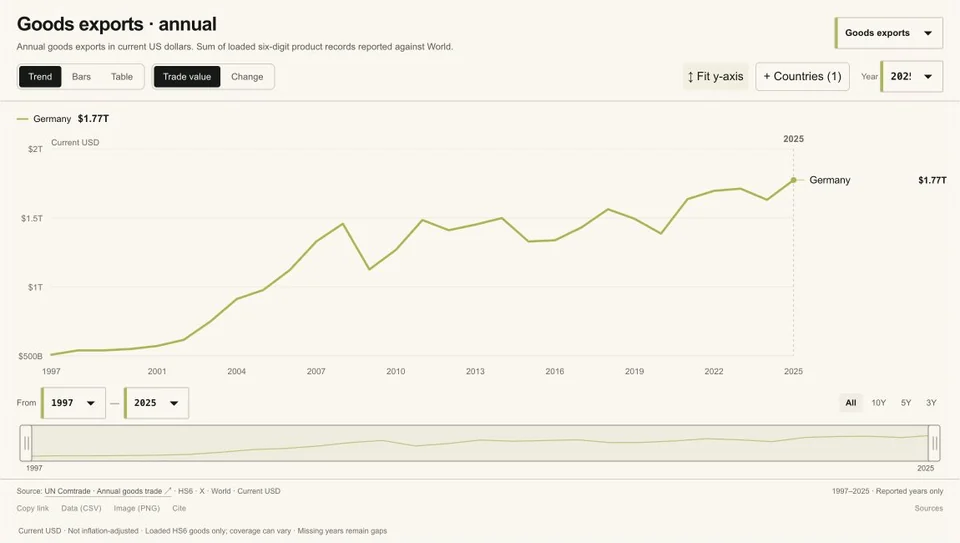
Imports, exports, the trade balance, partners and goods in an interactive UN Comtrade explorer.
World oil and gas trade
A map of crude petroleum, LNG and natural-gas imports from reported origin to market, annually and monthly.
Chart preview currently unavailable
Open reportTrade around Russia
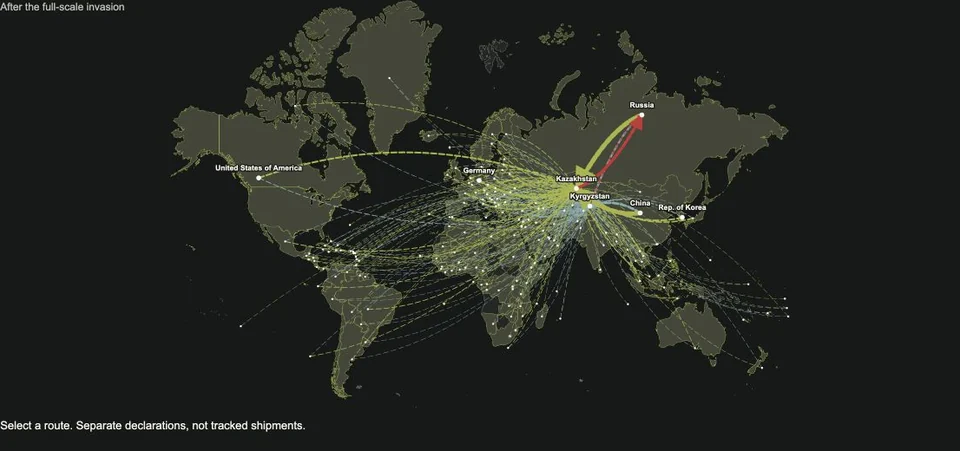
All suppliers to Kazakhstan and Kyrgyzstan. Annual and monthly trade, product dependencies and exports to Russia.
Automotive
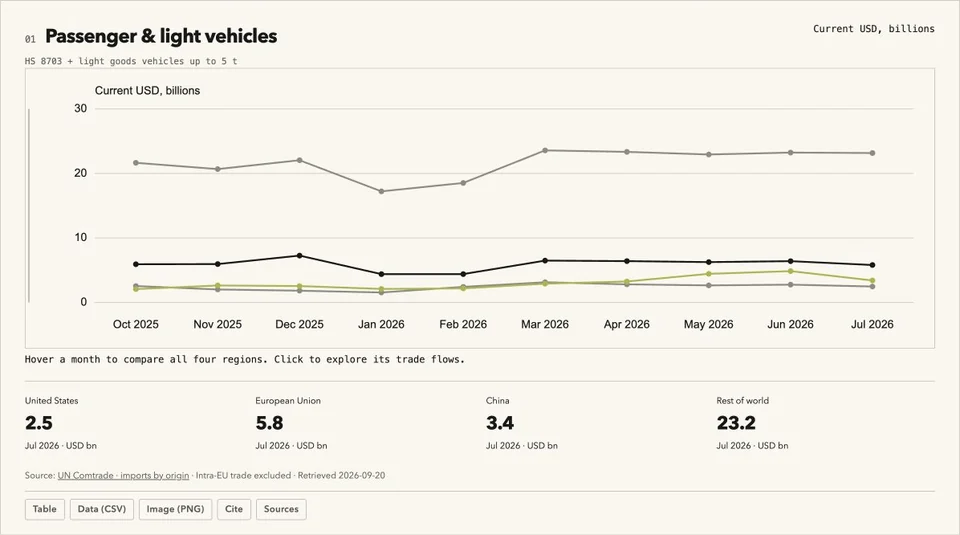
US, EU, China and rest of world. Monthly trade in passenger and light vehicles, heavy trucks and auto parts.
Global product markets
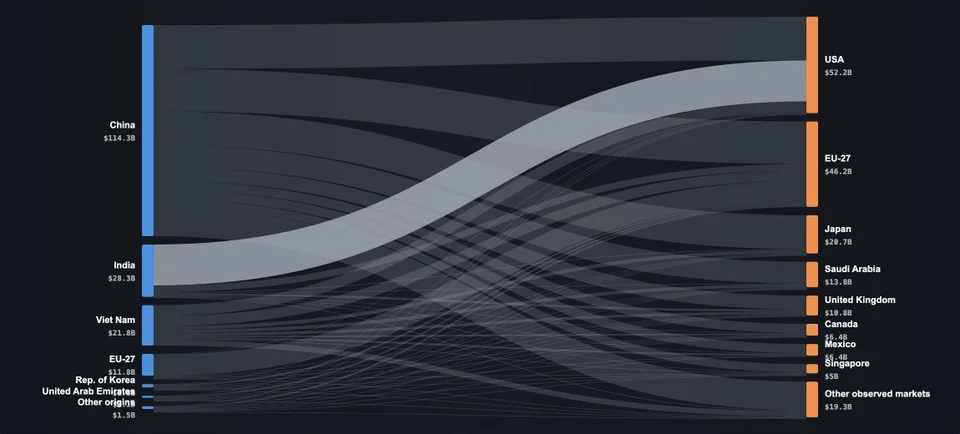
Follow smartphones, vehicles, medicines, chips and batteries from reported origin to importing market.
Society and the state
Who lives in a country, who governs it, and what the state directly owns or runs.
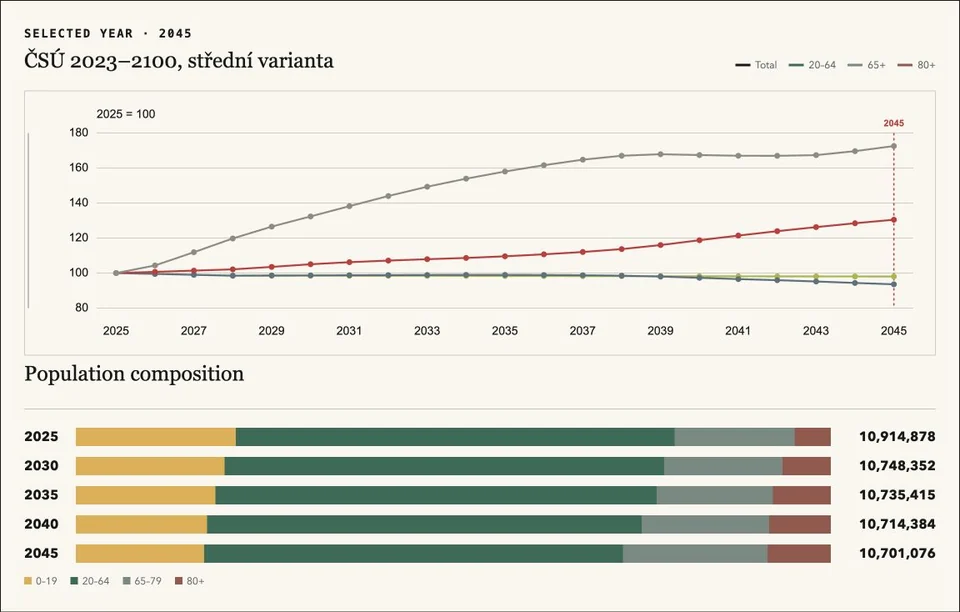
Population ageing
Official population projections, age structure and a demographic calculator; we do not forecast fiscal outcomes.
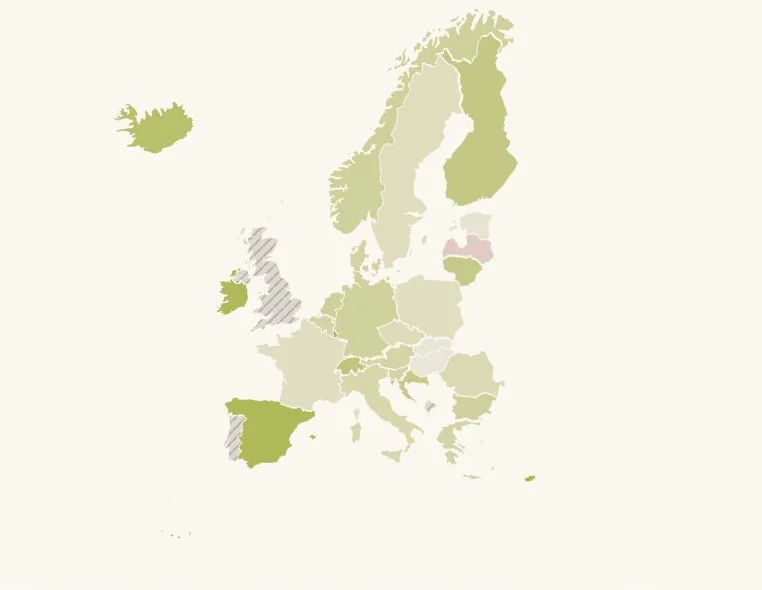
European migration
Migration flows and protection decisions across 33 European countries.
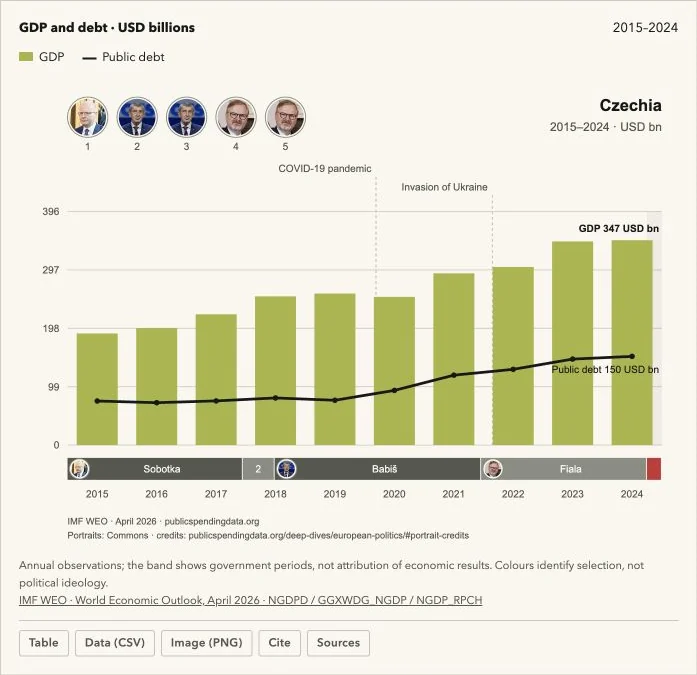
European politics
Who governed, what they promised and how GDP and debt evolved across the original ten-country benchmark.
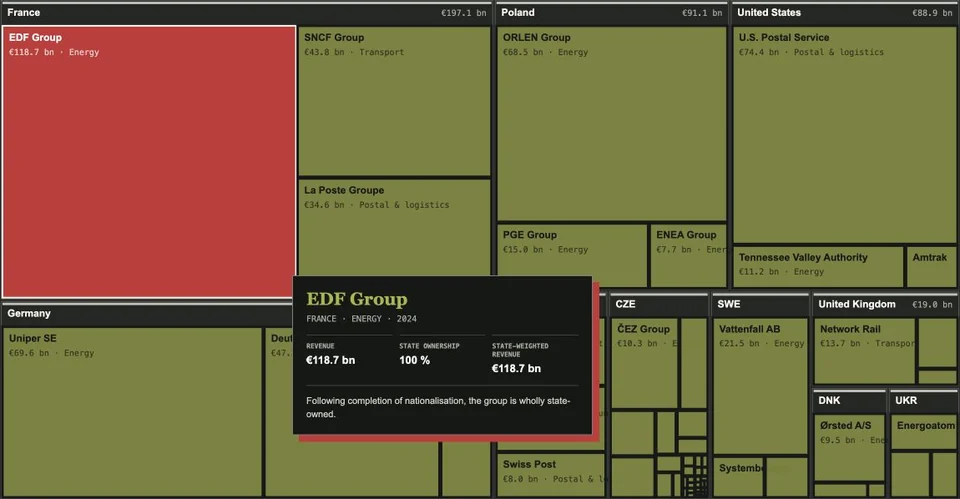
State-owned enterprises
A catalogue of the thirty largest nationally controlled enterprises, with revenue converted to euros.
Capital cities
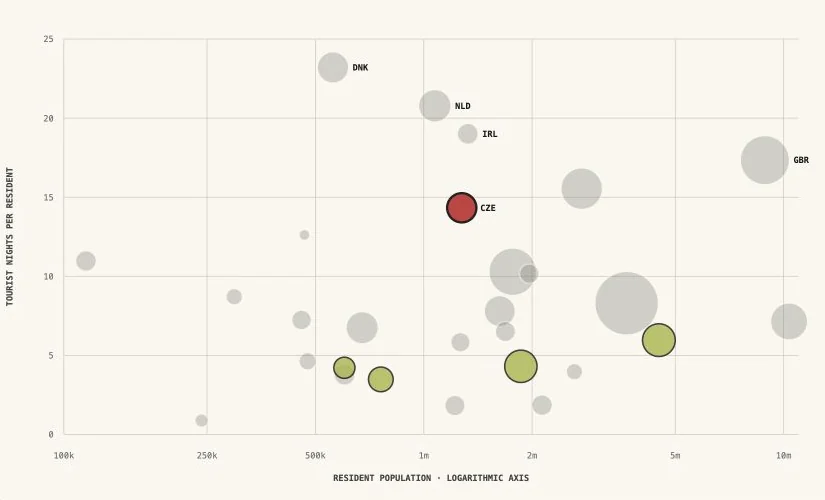
Capital-city budget plans, visitor numbers and comparisons within groups of similar cities.
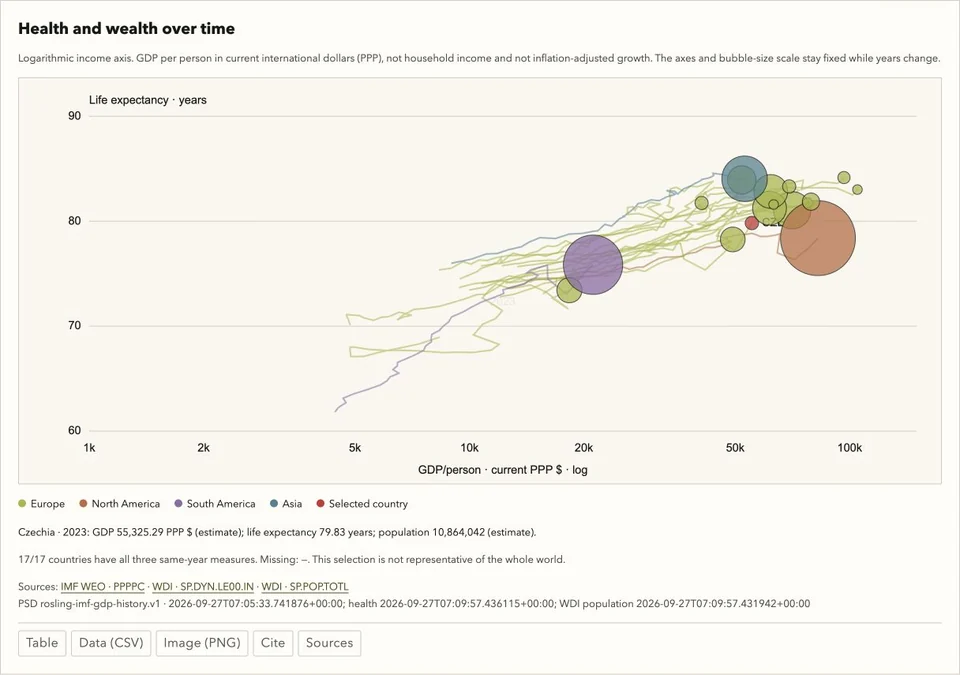
A tribute to Hans Rosling
Seven educational views of health, prosperity, spending, distributions, population and everyday life.
Shared structure
What every country comparison covers
Country spending, system capacity and outcomes, change over time, and a comparison against the same group of countries, in the same order in every report. Regional deep dives do not share this contract, because they go into the detail of a single budget.
Selected country
History
Comparison
Method
One country, one city
Regional deep dives
A closer look at one country or city, down to the details behind its budget.
Czechia
The state budget and public sector in detail.
Water in the landscape
Money, completed projects and measured results for river and wetland restoration, with European comparisons.
Chart preview currently unavailable
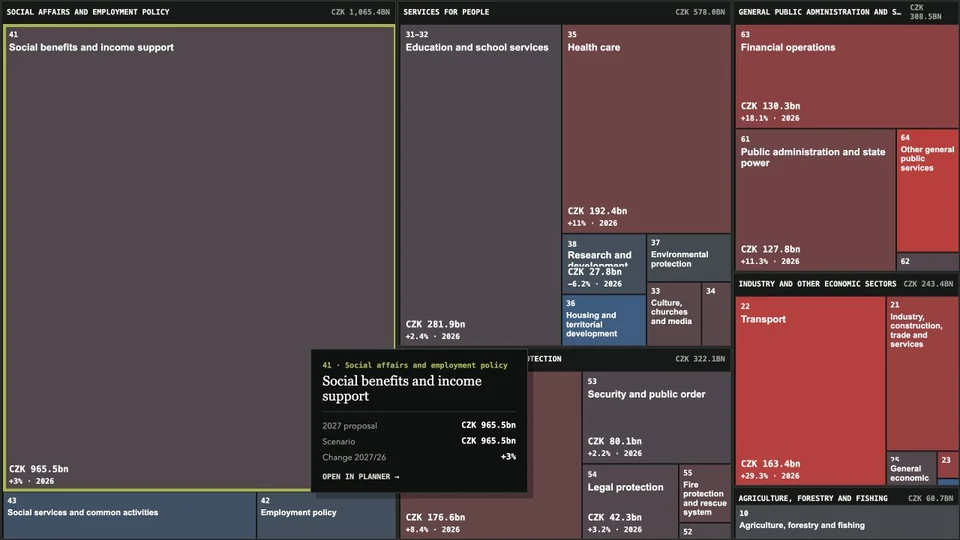
Open report2027 budget planner
Explore the proposal by function, change expenditure or revenue and see the effect on the deficit.
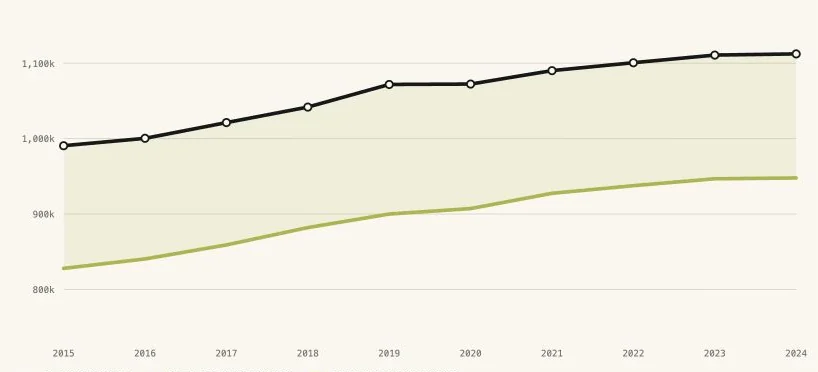
Public employment
The complete institutional boundary, a ten-year series and source layers kept separate to prevent double counting.
Czech annual money flows
Follow trade, income, finance and money through the Czech economy, with every accounting boundary visible.
Chart preview currently unavailable
Open reportNo reports found. Try another topic or source.